










.webp)

在Instagram上关注我们
不仅仅是一家户外用品公司

@sawyerproducts
Follow us on Instagram









Find the right bug spray for you based on the active ingredient, concentration and application type.
Watch videoWhen insect repellent is doing its job, you’ll happily forget you’re wearing it. If it’s not performing, on the other hand, you are almost guaranteed to think about bugs the entire time you’re hiking, camping, trail running or however else you like to spend time outside. Take it from an expert: “You miss a spot, the mosquitoes are going to find you, I'm sure,” says Dan Markowski, technical advisor for the American Mosquito Control Association, a not-for-profit organization focused on reducing the public health risks of disease-carrying pests. Especially when it comes to the risk of insect-borne diseases like malaria or Lyme disease, “It doesn't take all of them to bite you. It just takes one,” he says. “So yeah, I try to keep all of them off.”
Crawling, flying, biting critters (which we’ll generally refer to in this article as insects, even though not all of them technically are) will probably find a way to annoy you when you’re exploring outdoors—that’s their home, mind you. Beyond that truism, though, tackling the issue isn’t one-size-fits-all. What kind of insects will you be dodging? Will you be running and sweating a lot, or fly-fishing on a peaceful stream? (The technical term for the latter is “sitting duck.”) There are bug sprays catering to all manner of scenarios and application preferences; just as abundant are ineffective formulations that will have you ringing the dinner bell for every bloodthirsty bug in the area. No need to be that person. Read on to find the best options for shielding yourself from bugs wherever and however you recreate, and pointers for buying a bug spray that actually works.
Continue reading to learn more about choosing the an insect repellent, written by Erin Berger.

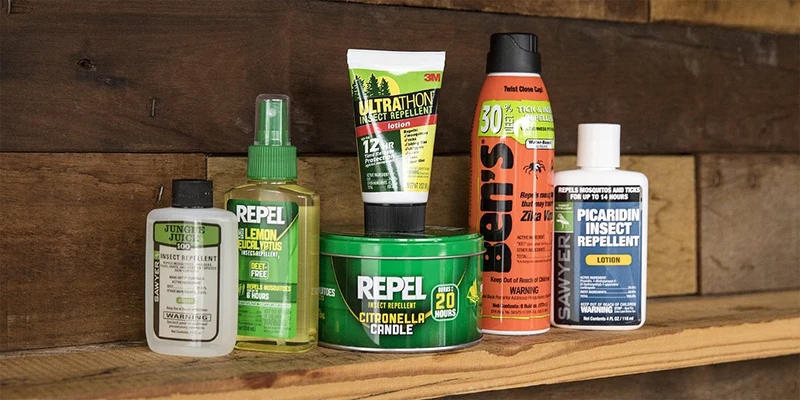
When insect repellent is doing its job, you’ll happily forget you’re wearing it. If it’s not performing, on the other hand, you are almost guaranteed to think about bugs the entire time you’re hiking, camping, trail running or however else you like to spend time outside. Take it from an expert: “You miss a spot, the mosquitoes are going to find you, I'm sure,” says Dan Markowski, technical advisor for the American Mosquito Control Association, a not-for-profit organization focused on reducing the public health risks of disease-carrying pests. Especially when it comes to the risk of insect-borne diseases like malaria or Lyme disease, “It doesn't take all of them to bite you. It just takes one,” he says. “So yeah, I try to keep all of them off.”
Crawling, flying, biting critters (which we’ll generally refer to in this article as insects, even though not all of them technically are) will probably find a way to annoy you when you’re exploring outdoors—that’s their home, mind you. Beyond that truism, though, tackling the issue isn’t one-size-fits-all. What kind of insects will you be dodging? Will you be running and sweating a lot, or fly-fishing on a peaceful stream? (The technical term for the latter is “sitting duck.”) There are bug sprays catering to all manner of scenarios and application preferences; just as abundant are ineffective formulations that will have you ringing the dinner bell for every bloodthirsty bug in the area. No need to be that person. Read on to find the best options for shielding yourself from bugs wherever and however you recreate, and pointers for buying a bug spray that actually works.
Continue reading to learn more about choosing the an insect repellent, written by Erin Berger.
When insect repellent is doing its job, you’ll happily forget you’re wearing it. If it’s not performing, on the other hand, you are almost guaranteed to think about bugs the entire time you’re hiking, camping, trail running or however else you like to spend time outside. Take it from an expert: “You miss a spot, the mosquitoes are going to find you, I'm sure,” says Dan Markowski, technical advisor for the American Mosquito Control Association, a not-for-profit organization focused on reducing the public health risks of disease-carrying pests. Especially when it comes to the risk of insect-borne diseases like malaria or Lyme disease, “It doesn't take all of them to bite you. It just takes one,” he says. “So yeah, I try to keep all of them off.”
Crawling, flying, biting critters (which we’ll generally refer to in this article as insects, even though not all of them technically are) will probably find a way to annoy you when you’re exploring outdoors—that’s their home, mind you. Beyond that truism, though, tackling the issue isn’t one-size-fits-all. What kind of insects will you be dodging? Will you be running and sweating a lot, or fly-fishing on a peaceful stream? (The technical term for the latter is “sitting duck.”) There are bug sprays catering to all manner of scenarios and application preferences; just as abundant are ineffective formulations that will have you ringing the dinner bell for every bloodthirsty bug in the area. No need to be that person. Read on to find the best options for shielding yourself from bugs wherever and however you recreate, and pointers for buying a bug spray that actually works.
Continue reading to learn more about choosing the an insect repellent, written by Erin Berger.
不仅仅是一家户外用品公司

