


%20copy.webp)






在Instagram上关注我们
不仅仅是一家户外用品公司

@sawyerproducts
Follow us on Instagram

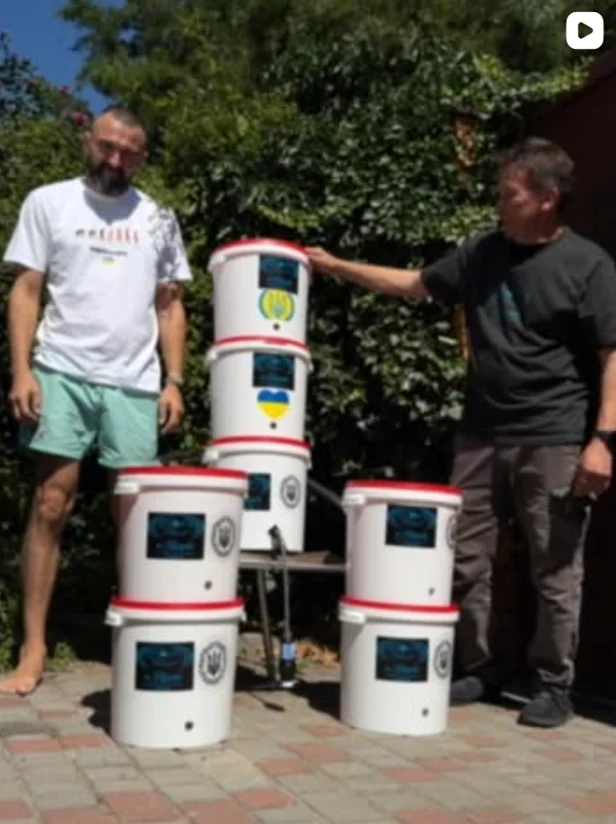
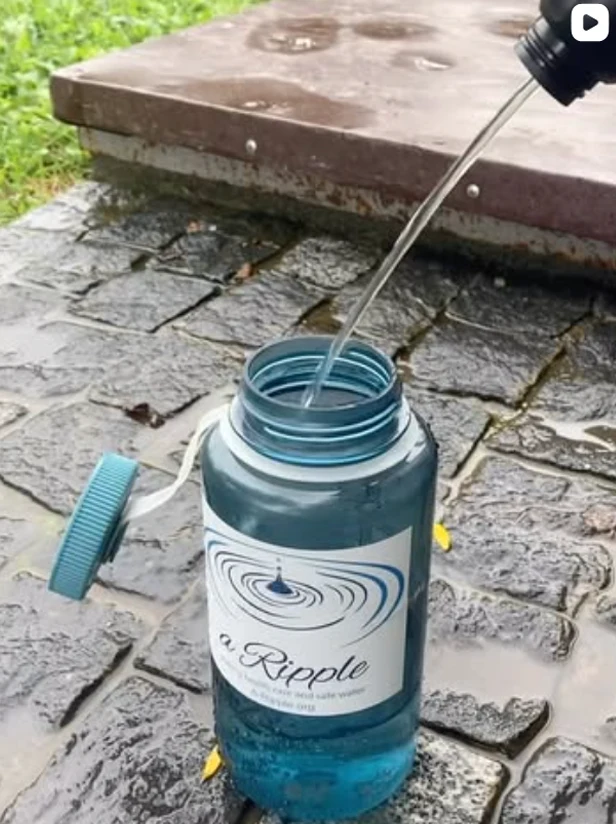

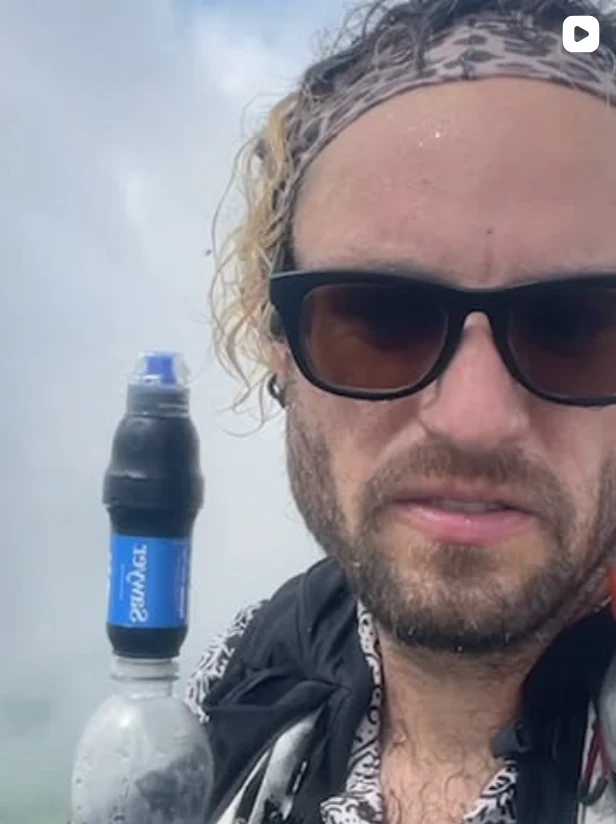



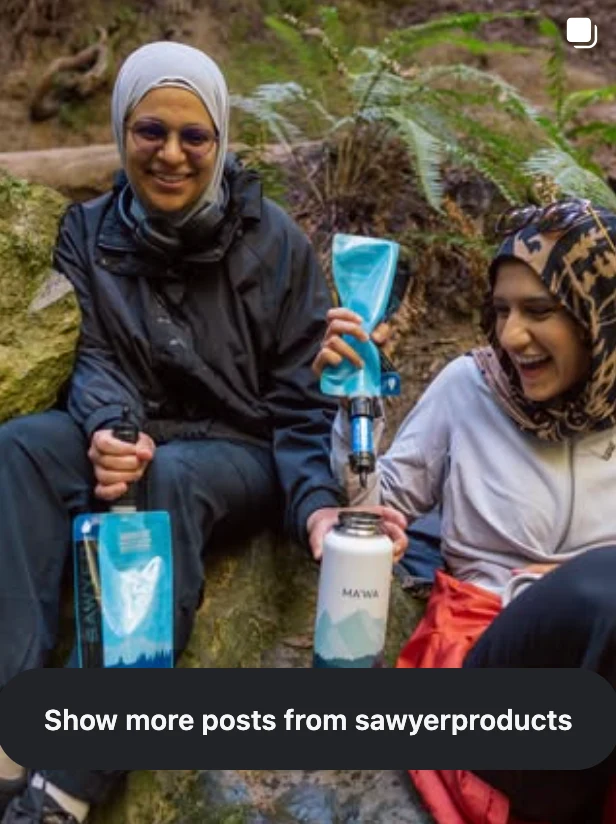

The Sawyer filter gave me an unexpected sense of freedom: I could drink water anywhere without worrying about my health or using local infrastructure.
Watch video
Bali is one of the most visited destinations in Asia and the most popular island in Indonesia. Its image is defined by paradise-like beaches, dreamy rice terraces, and a vibrant culture. However, behind every perfect postcard lies a reality that is rarely shown: a paradise drowning in waste.
Bali produces 1.6 million tons of waste per year, of which 330,000 tons are plastic.
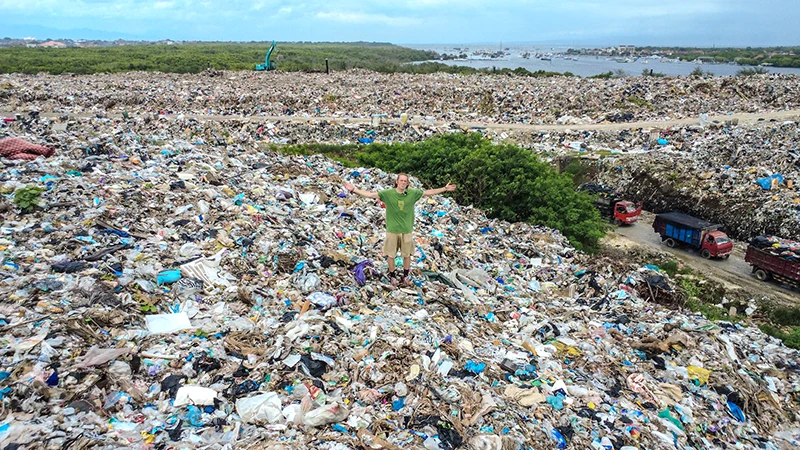
The pictures flooding social media rarely reveal the other side: beaches covered in plastic waste washed ashore by the tide, streets overflowing with trash, and landfills exceeding their limits.
The largest landfill, Suwung, spans 32 hectares, the equivalent of 42 football fields, but despite its size, it is just one of ten sites that manage only 48% of the island’s waste.
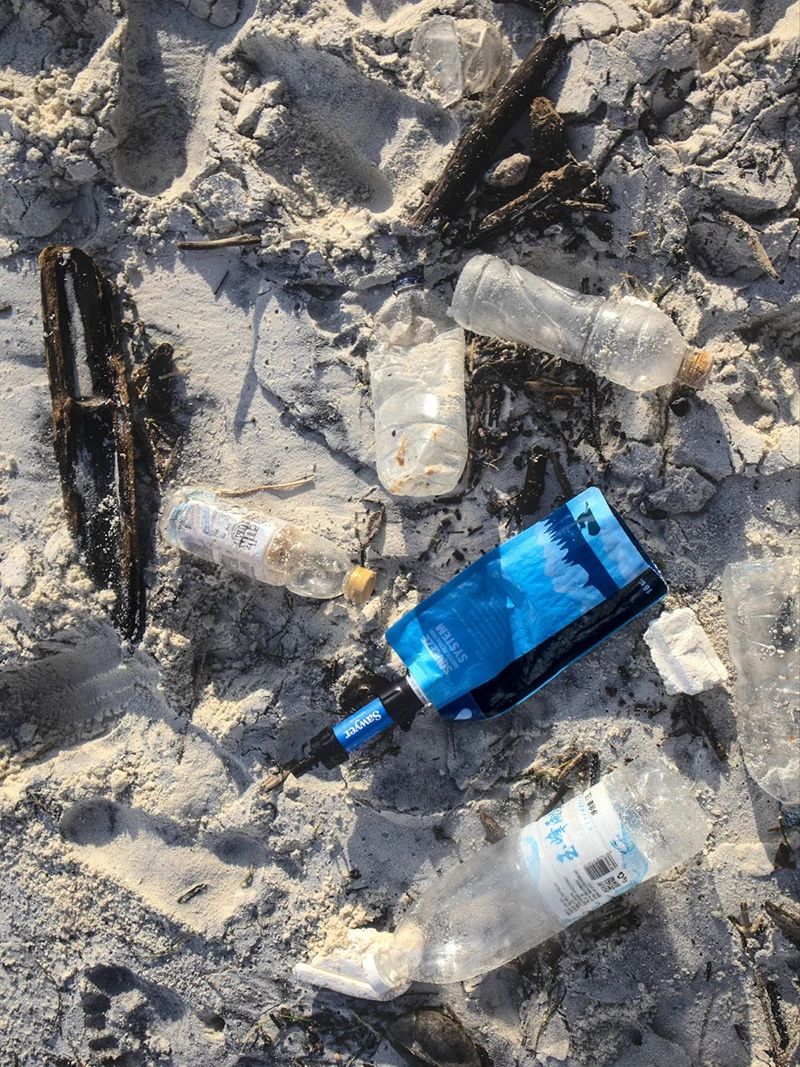
This environmental crisis is not just a matter of waste management or environmental education among locals; it is directly linked to tourism. With the surge of visitors in recent decades, the consumption of single use plastics has skyrocketed, and the recycling infrastructure has simply not been able to keep up.
This raises a crucial question: How can we, as travelers, minimize our impact and contribute to the preservation of these places?

It’s not about pointing fingers, but about accepting our share of responsibility.
This contrast between Bali’s idyllic image and its harsh reality compelled me to speak up about a critical situation that most visitors are unaware of.
Every bottle of water we buy, every single use product we consume, and every choice we make as tourists leaves a mark. And while we may not be able to solve the problem globally, we can make decisions that contribute to the solution.

One of the most effective ways to reduce our impact is to reconsider how we consume drinking water while traveling. This is where my experience with the Sawyer water filter completely changed my perspective.
Awareness and responsibility are the first steps, but taking action is what truly creates change.

At first, the idea of drinking tap water in Indonesia made me uneasy. The infamous Bali Belly (a common gastrointestinal infection among travelers) and my previous experiences in other islands made me hesitant.
But after witnessing the scale of Bali’s plastic problem, I decided to take concrete action: I stopped buying bottled water and relied exclusively on my Sawyer filter.

The impact of this small change was huge. In just two months, I avoided consuming dozens of plastic bottles, reduced my environmental footprint, and felt more aligned with the values of responsible tourism.
Additionally, it gave me an unexpected sense of freedom: I could drink water anywhere without worrying about my health or depending on local infrastructure.

When I traveled to Sumba, a less touristy island with limited access to potable water, my filter became more than just an accessory it was a lifesaver. During my motorbike journey across the island, it kept me hydrated on remote beaches and in villages where bottled water was almost impossible to find.
For adventure travel, a good water filter is not a luxury it’s a necessity.
The Sawyer filter is not only practical and lightweight but also an accessible and sustainable solution for any traveler looking to reduce their impact and gain more independence.

One of the things that surprised me the most was people’s reactions. Everywhere I used the filter, both tourists and locals asked how it worked, especially Balinese people, who had never seen a purification system like this before.
This made me realize the power of our individual choices to create awareness. If every traveler adopted small changes like this, the impact would be massive.
-Avoid single-use plastics and opt for reusable alternatives.
-Actively contribute by keeping beaches and natural spaces clean.
-Support local initiatives such as EcoBali, Sungai Watch, and Community Waste Project, which work to manage waste sustainably.
-Share experiences and educate other travelers on how they can reduce their impact.

After leaving everything behind at 23 to fulfill my dream of backpacking through Asia, I found my purpose in life: to become better. And with that came my mission: to build a community of conscious travelers to inspire and educate people to travel with purpose and create a positive impact on the places that help us grow and learn.
Using and sharing my experience with Sawyer filters aligns perfectly with this goal.
By using a filter instead of plastic bottles, I can give back with gratitude something positive to the places that teach us so much through travel.


Bali is one of the most visited destinations in Asia and the most popular island in Indonesia. Its image is defined by paradise-like beaches, dreamy rice terraces, and a vibrant culture. However, behind every perfect postcard lies a reality that is rarely shown: a paradise drowning in waste.
Bali produces 1.6 million tons of waste per year, of which 330,000 tons are plastic.
The pictures flooding social media rarely reveal the other side: beaches covered in plastic waste washed ashore by the tide, streets overflowing with trash, and landfills exceeding their limits.
The largest landfill, Suwung, spans 32 hectares, the equivalent of 42 football fields, but despite its size, it is just one of ten sites that manage only 48% of the island’s waste.
This environmental crisis is not just a matter of waste management or environmental education among locals; it is directly linked to tourism. With the surge of visitors in recent decades, the consumption of single use plastics has skyrocketed, and the recycling infrastructure has simply not been able to keep up.
This raises a crucial question: How can we, as travelers, minimize our impact and contribute to the preservation of these places?
It’s not about pointing fingers, but about accepting our share of responsibility.
This contrast between Bali’s idyllic image and its harsh reality compelled me to speak up about a critical situation that most visitors are unaware of.
Every bottle of water we buy, every single use product we consume, and every choice we make as tourists leaves a mark. And while we may not be able to solve the problem globally, we can make decisions that contribute to the solution.
One of the most effective ways to reduce our impact is to reconsider how we consume drinking water while traveling. This is where my experience with the Sawyer water filter completely changed my perspective.
Awareness and responsibility are the first steps, but taking action is what truly creates change.
At first, the idea of drinking tap water in Indonesia made me uneasy. The infamous Bali Belly (a common gastrointestinal infection among travelers) and my previous experiences in other islands made me hesitant.
But after witnessing the scale of Bali’s plastic problem, I decided to take concrete action: I stopped buying bottled water and relied exclusively on my Sawyer filter.
The impact of this small change was huge. In just two months, I avoided consuming dozens of plastic bottles, reduced my environmental footprint, and felt more aligned with the values of responsible tourism.
Additionally, it gave me an unexpected sense of freedom: I could drink water anywhere without worrying about my health or depending on local infrastructure.
When I traveled to Sumba, a less touristy island with limited access to potable water, my filter became more than just an accessory it was a lifesaver. During my motorbike journey across the island, it kept me hydrated on remote beaches and in villages where bottled water was almost impossible to find.
For adventure travel, a good water filter is not a luxury it’s a necessity.
The Sawyer filter is not only practical and lightweight but also an accessible and sustainable solution for any traveler looking to reduce their impact and gain more independence.
One of the things that surprised me the most was people’s reactions. Everywhere I used the filter, both tourists and locals asked how it worked, especially Balinese people, who had never seen a purification system like this before.
This made me realize the power of our individual choices to create awareness. If every traveler adopted small changes like this, the impact would be massive.
-Avoid single-use plastics and opt for reusable alternatives.
-Actively contribute by keeping beaches and natural spaces clean.
-Support local initiatives such as EcoBali, Sungai Watch, and Community Waste Project, which work to manage waste sustainably.
-Share experiences and educate other travelers on how they can reduce their impact.
After leaving everything behind at 23 to fulfill my dream of backpacking through Asia, I found my purpose in life: to become better. And with that came my mission: to build a community of conscious travelers to inspire and educate people to travel with purpose and create a positive impact on the places that help us grow and learn.
Using and sharing my experience with Sawyer filters aligns perfectly with this goal.
By using a filter instead of plastic bottles, I can give back with gratitude something positive to the places that teach us so much through travel.
Bali is one of the most visited destinations in Asia and the most popular island in Indonesia. Its image is defined by paradise-like beaches, dreamy rice terraces, and a vibrant culture. However, behind every perfect postcard lies a reality that is rarely shown: a paradise drowning in waste.
Bali produces 1.6 million tons of waste per year, of which 330,000 tons are plastic.
The pictures flooding social media rarely reveal the other side: beaches covered in plastic waste washed ashore by the tide, streets overflowing with trash, and landfills exceeding their limits.
The largest landfill, Suwung, spans 32 hectares, the equivalent of 42 football fields, but despite its size, it is just one of ten sites that manage only 48% of the island’s waste.
This environmental crisis is not just a matter of waste management or environmental education among locals; it is directly linked to tourism. With the surge of visitors in recent decades, the consumption of single use plastics has skyrocketed, and the recycling infrastructure has simply not been able to keep up.
This raises a crucial question: How can we, as travelers, minimize our impact and contribute to the preservation of these places?
It’s not about pointing fingers, but about accepting our share of responsibility.
This contrast between Bali’s idyllic image and its harsh reality compelled me to speak up about a critical situation that most visitors are unaware of.
Every bottle of water we buy, every single use product we consume, and every choice we make as tourists leaves a mark. And while we may not be able to solve the problem globally, we can make decisions that contribute to the solution.
One of the most effective ways to reduce our impact is to reconsider how we consume drinking water while traveling. This is where my experience with the Sawyer water filter completely changed my perspective.
Awareness and responsibility are the first steps, but taking action is what truly creates change.
At first, the idea of drinking tap water in Indonesia made me uneasy. The infamous Bali Belly (a common gastrointestinal infection among travelers) and my previous experiences in other islands made me hesitant.
But after witnessing the scale of Bali’s plastic problem, I decided to take concrete action: I stopped buying bottled water and relied exclusively on my Sawyer filter.
The impact of this small change was huge. In just two months, I avoided consuming dozens of plastic bottles, reduced my environmental footprint, and felt more aligned with the values of responsible tourism.
Additionally, it gave me an unexpected sense of freedom: I could drink water anywhere without worrying about my health or depending on local infrastructure.
When I traveled to Sumba, a less touristy island with limited access to potable water, my filter became more than just an accessory it was a lifesaver. During my motorbike journey across the island, it kept me hydrated on remote beaches and in villages where bottled water was almost impossible to find.
For adventure travel, a good water filter is not a luxury it’s a necessity.
The Sawyer filter is not only practical and lightweight but also an accessible and sustainable solution for any traveler looking to reduce their impact and gain more independence.
One of the things that surprised me the most was people’s reactions. Everywhere I used the filter, both tourists and locals asked how it worked, especially Balinese people, who had never seen a purification system like this before.
This made me realize the power of our individual choices to create awareness. If every traveler adopted small changes like this, the impact would be massive.
-Avoid single-use plastics and opt for reusable alternatives.
-Actively contribute by keeping beaches and natural spaces clean.
-Support local initiatives such as EcoBali, Sungai Watch, and Community Waste Project, which work to manage waste sustainably.
-Share experiences and educate other travelers on how they can reduce their impact.
After leaving everything behind at 23 to fulfill my dream of backpacking through Asia, I found my purpose in life: to become better. And with that came my mission: to build a community of conscious travelers to inspire and educate people to travel with purpose and create a positive impact on the places that help us grow and learn.
Using and sharing my experience with Sawyer filters aligns perfectly with this goal.
By using a filter instead of plastic bottles, I can give back with gratitude something positive to the places that teach us so much through travel.
不仅仅是一家户外用品公司

